What happened
You slipped on a wet floor. Now prove they knew.
The fact that the floor was wet is not the case. Every store has wet floors sometimes. The case is that this particular wetness was there long enough for the store to have found and fixed it, and it wasn't.
Almost everything else — the missing sign, the employee who said 'we've been meaning to get that' — is supporting evidence for that one point.
Published July 27, 2026 · Last reviewed July 30, 2026
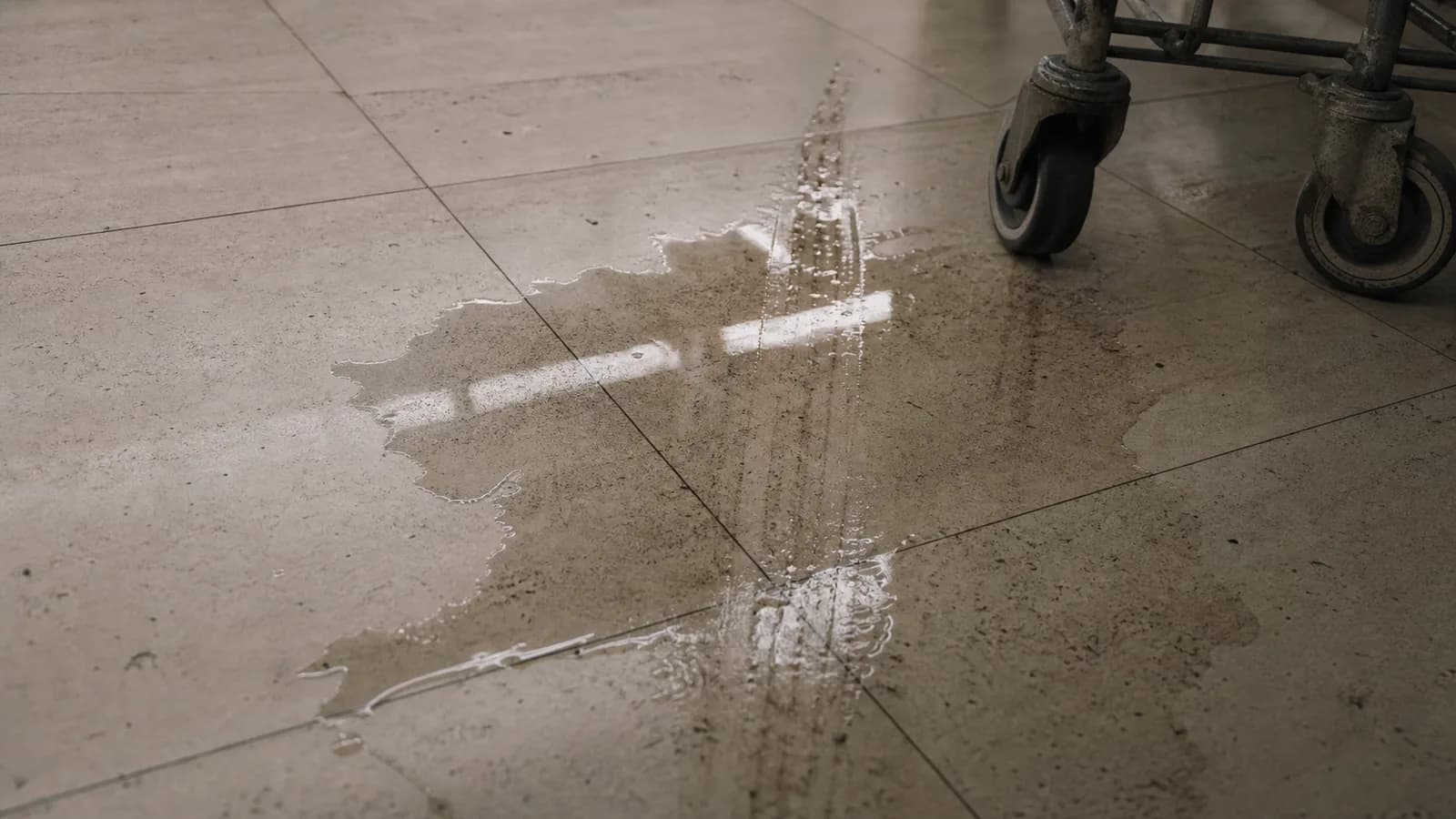
The three ways to establish notice
There are exactly three, and knowing which one applies to you shapes what evidence matters.
- The store created the hazard itself — a mopping crew, a leaking cooler they installed, an overfilled drink station, a freshly waxed aisle. When the store made the mess, you generally don't have to prove they knew about it
- Actual notice — someone told them. A customer reported it, an employee saw it, it was called in over the headset. Every one of those leaves a record
- Constructive notice — it was there long enough that reasonable inspection would have found it. This is the most common and the hardest, and it is what video and sweep logs are for
| Route | What you must show | Evidence that proves it |
|---|---|---|
| Store created it | An employee caused the hazard | Witnesses, video, the task itself |
| Actual notice | Somebody told them, or staff saw it | Incident reports, complaint logs, staff testimony |
| Constructive notice | It was there long enough to find | Sweep logs, video, condition of the spill |
Sweep logs
Most large retailers require employees to walk and inspect the floor on a schedule and initial a log. Those logs are the store's own evidence that it was being careful — and when they're produced in litigation, they frequently show the opposite.
A log showing a sweep every 30 minutes, with a fall that happened 45 minutes after the last recorded sweep, is a strong constructive notice case. A log with entries filled in identically for eight straight hours in the same pen is worse for the store than no log at all. So is a log for that day that has gone missing.
The wet floor sign argument
The absence of a warning cone helps you, but be careful about how much weight to put on it. A store's duty is to fix hazards it knows about, and warning is only one acceptable way of discharging that duty — sometimes a cone next to a spill is legally sufficient.
The reverse point is more useful: if a cone was out, the store had actual notice of the hazard by definition. The fight then becomes whether the warning was adequate and adequately placed, which is a much better fight to be having.
What to do now
In rough order of urgency.
- Report it to a manager before you leave and insist an incident report is written. Ask for a copy or photograph it
- Photograph the substance on the floor, the surrounding area, any signage, and your shoes
- Note the exact time and the aisle or department
- Get names and numbers of anyone who saw it, including employees
- Keep the clothing and footwear you were wearing, unwashed
- Get medical attention the same day if you're hurt — a gap between the fall and treatment is the first thing a defense adjuster will point at
- Send a written preservation demand for video and sweep logs, or have someone send one, within days
What tends to make a claim worth pursuing
None of these is a guarantee. They are the facts an attorney will look for first when deciding whether to take a case like yours.
- The substance was tracked, dried at the edges, or had cart tracks through it — all evidence it had been there a while
- No warning cone was out, or one was placed after the fall
- An employee said something suggesting they already knew
- There's an incident report with your name on it
- The area is covered by a visible camera
- You sought medical treatment the same or next day
- A leak, cooler, or ice machine has a history of dripping there
Questions
I didn't report it before I left. Is my claim over?
No, but it's harder. Report it in writing as soon as you can — an email or the store's online contact form creates a dated record. The defense will argue the fall never happened or happened elsewhere, so any contemporaneous evidence you do have (a receipt with a timestamp, a text to someone, photos) becomes more important.
The store already offered to pay my medical bills. Should I take it?
Understand what it is first. Many stores have a medical-payments program that covers initial bills with no admission of fault, and accepting it doesn't necessarily waive anything. But if you're asked to sign a release, that document ends your claim entirely — including for injuries that haven't shown up yet. Have it read before signing.
Does it matter that I was looking at my phone?
It matters, and the defense will use it, but in most states it reduces your recovery by your share of fault rather than eliminating it. Being distracted in a store where distraction is the entire point of the merchandising is also a more sympathetic fact than it sounds.
How do I get the surveillance video?
You generally can't just ask for it as a customer and receive it — stores routinely decline. What works is a written preservation letter putting them on notice of a claim and demanding the footage be retained, followed by a formal request in litigation. The letter needs to go out before the retention window closes, which is why this is urgent.
Read next
Getting the video before it's gone
Footage loops in weeks. A written preservation demand is the only thing that reliably stops it.
Read thisWhat 'notice' actually means
Three ways to prove a store was responsible. Which one you have decides everything.
Read thisThe deadlines
The legal deadline is years away. The one that matters is weeks.
Read thisOther situations

I fell in a grocery store
Supermarkets create hazards by design. Several states let you use that.
Read this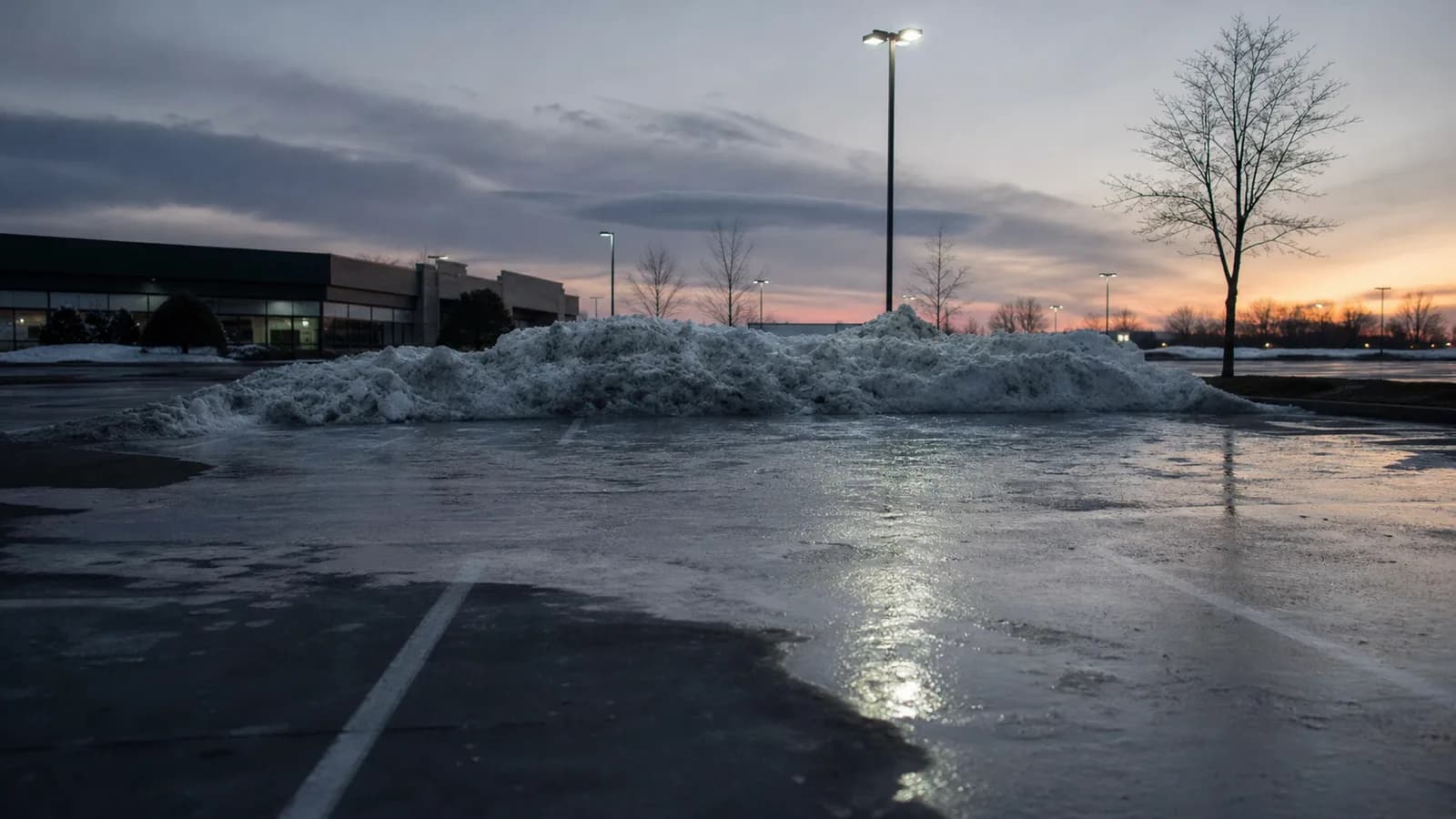
I was hurt in the parking lot
The first question isn't what happened. It's who was contractually responsible for the lot.
Read this
Merchandise fell on me
Usually a stronger claim than a slip — the store stacked it, so they created the hazard.
Read thisEvidence and research resources
See all resourcesEvidence checklist
The records, objects, photographs, and timelines worth preserving now.
Read thisPlain-language glossary
Medical, insurance, safety, and legal terms explained without the jargon.
Read thisOfficial sources
The government, court, safety, and medical sources used to check this site.
Read thisHave a lawyer look at this
A free review tells you whether the facts you have are the facts that matter. No cost, and no obligation to hire anyone.
Free · No obligation · About 90 seconds