Guide
What a store injury claim is actually worth
Being straight about this: retail premises claims tend to settle for less than vehicle or construction cases, and it's worth knowing why rather than being surprised later.
The reasons are structural. Liability is genuinely contested more often, comparative fault arguments are readily available, injuries in these falls are frequently soft-tissue, and juries bring more skepticism to slip and fall claims than to almost any other kind.
Published July 27, 2026 · Last reviewed July 30, 2026
What actually drives the number
In rough order.
- Objective injury findings — a fracture, a surgery, a documented tear on imaging. Objective beats subjective by a wide margin here
- Whether liability is clear or genuinely disputed. A case with video of an employee walking past the spill twice is worth a multiple of the same injury with no video
- Your comparative fault percentage
- Whether you sought treatment immediately. A gap between the fall and the first visit is the most commonly exploited weakness in this category
- Prior injuries to the same body part, which the defense will find in your records
- Whether you can work, and for how long you couldn't
- The defendant. National chains have large policies and organized defense programs; a small independent store may have limited coverage that caps the case regardless of its merit
Why the treatment gap hurts so much
It comes up in nearly every one of these cases. You fall, you're embarrassed, you tell everyone you're fine, you go home. Three days later you can't turn your head.
The defense reads that gap as proof the injury either didn't happen there or wasn't serious. It is beatable — with a consistent account, the incident report, and a doctor connecting the mechanism to the injury — but it costs real value every time. Same-day or next-day treatment is the single most valuable thing you can do for a claim's worth after the fall itself.
Fees and costs
Contingency, typically a third of the recovery, no fee if there's no recovery. Case costs — records, experts, filing, depositions — are separate and normally advanced by the firm.
Because the values in this category are more modest, ask specifically how costs are handled on a smaller case. A case that settles modestly with heavy expert costs can net less than expected, and a good firm will tell you that up front.
Questions
The store's insurer offered me a few thousand dollars quickly. Should I take it?
Early offers are almost always priced on the assumption you don't yet know the extent of your injury — and accepting means signing a release that ends everything, including for problems that appear later. If you're still treating or still symptomatic, you're not in a position to value it.
I have a prior back injury. Does that kill the claim?
No. Aggravation of a pre-existing condition is compensable, and most states apply the principle that a defendant takes the plaintiff as they find them. What it does mean is that your prior records will be scrutinized, so disclose the history to your attorney immediately rather than letting the defense find it first.
Is it worth pursuing at all for a minor injury?
Sometimes not, and an honest answer to that is worth having. If the medical bills are small and liability is contested, the realistic recovery may not justify the time. A free review that ends with 'this probably isn't worth it' is a useful outcome.
Situations this applies to

Merchandise fell on me
Usually a stronger claim than a slip — the store stacked it, so they created the hazard.
Read this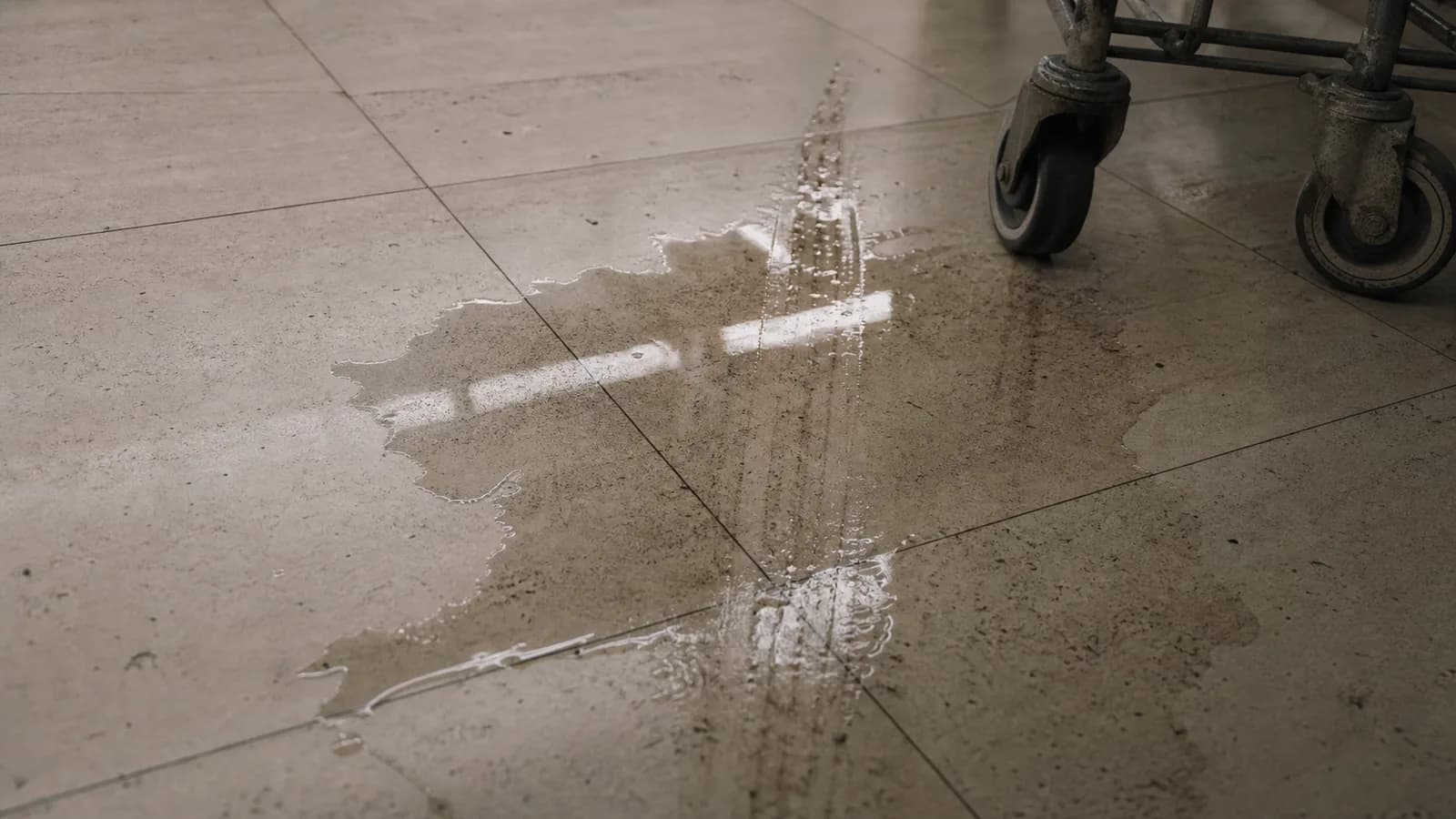
I slipped on a wet floor
The whole case is how long the spill sat there. Sweep logs and video answer it.
Read this
I fell in a grocery store
Supermarkets create hazards by design. Several states let you use that.
Read this
I was hurt in the parking lot
The first question isn't what happened. It's who was contractually responsible for the lot.
Read thisRelated guides
What 'notice' actually means
Three ways to prove a store was responsible. Which one you have decides everything.
Read thisGetting the video before it's gone
Footage loops in weeks. A written preservation demand is the only thing that reliably stops it.
Read thisThe deadlines
The legal deadline is years away. The one that matters is weeks.
Read thisEvidence and research resources
See all resourcesEvidence checklist
The records, objects, photographs, and timelines worth preserving now.
Read thisPlain-language glossary
Medical, insurance, safety, and legal terms explained without the jargon.
Read thisOfficial sources
The government, court, safety, and medical sources used to check this site.
Read thisGet a straight answer about your case
Reading only gets you so far. A free review puts your actual facts in front of an attorney who handles these claims.
Free · No obligation · About 90 seconds